

Gray Contact Lenses: How to Choose the Right Shade for Your Eyes?

There's something about gray that just works.
It's not as bold a color as blue, not as warm as honey, and not as striking as bright green, but it can change the entire look of the eyes in a very interesting way.
And that's exactly what makes gray lenses such a popular choice for anyone looking for colored lenses.
On one hand you can achieve a subtle and natural look, and on the other hand you can choose a lighter gray and get a change that's really noticeable.
But gray is not a single color.
There's smoky gray, silvery gray, cool gray, gray with a touch of blue, and even gray that takes on a slightly greenish tone on the eye.
So how do you know what to choose?
Why gray lenses specifically?
Gray is a relatively neutral color, so it can work with a wide range of eye colors, skin tones, and hair colors.
It can brighten dark eyes, cool down brown eyes, give green eyes a more smoky appearance, or change blue eyes in a relatively subtle way.
And it's also one of the shades that's easy to wear day-to-day.
Anyone looking for a change that's noticeable but doesn't necessarily want a very bold color can find in gray exactly the middle ground.
If you're still at the stage where you're comparing between a few color families, it's worth starting with our guide on which colored lens color is right for me.
Light gray or smoky gray?
This is one of the most common dilemmas.
Light gray
Light gray typically creates a more significant change.
On dark eyes it can brighten the iris significantly and create clear contrast.
On light eyes it can give a cooler appearance and even a silvery look.
If you want people to notice that your eyes have changed, this is usually the stronger direction.
Smoky gray
Smoky gray is usually softer.
Instead of completely replacing the eye color, it blends with it and creates a deeper, more relaxed appearance.
On brown eyes it can create a combination of warmth and gray, and on green eyes it sometimes takes on a grayish-green tone.
For those who prefer a more relaxed look, this can be an excellent direction.
How do gray lenses look on brown eyes?
Brown eyes are a warm base, and gray is generally considered a cool color.
The combination of the two can be very beautiful.
For medium brown eyes, gray can create a slightly smoky look and reduce the warmth of the eye.
For darker brown eyes, a lens with significant coverage can give a much more noticeable change.
Those looking for a relatively natural look can choose deep gray or one that has some warmth or green in it.
Those who want a more obvious change can go toward a lighter gray or silver.
And what about very dark eyes?
When eye color is almost black, the difference between shades of gray becomes even more important.
A lens that is too transparent may blend with the dark color and create a deeper result than what you see in the image.
In contrast, a shade with stronger coverage can brighten the eye significantly.
If you want the look to still feel natural, you don't have to choose the brightest gray.
Sometimes a dark or smoky gray actually gives the most flattering result.
Gray lenses on green eyes
This is a combination that can be really beautiful.
Gray on a green base won't always look like a "clean" gray.
Sometimes the green color of the eye remains slightly underneath the lens and creates a grayish-green tone.
The result can be very natural, especially if the lens is not completely opaque.
Those who are torn between gray and green can also compare against green contact lenses and see which direction suits the look they're looking for better.
Gray lenses on blue eyes
On blue eyes, gray usually creates a more subtle change.
It can turn light blue into a more smoky color, add depth, or create a silver look.
If you love your blue eyes but want a small change, gray is an interesting option because it doesn't necessarily change the entire identity of the color.
On the other hand, if you specifically want to emphasize blue, you can also compare with blue contact lenses.
How to choose a gray that looks natural?
If naturalness is the most important thing for you, look at more than just the color.
It's worth checking:
How the transition looks near the pupil.
Whether there is a very dark outer ring.
How bright the shade is compared to the original eye.
Whether there are touches of warmth, green, or blue within the gray.
And what the coverage level of the lens is.
A gray lens with a soft transition can look very natural even if it changes eye color significantly.
If that's exactly the effect you're looking for, it's recommended to also read our guide on natural colored contact lenses.
The rim around the lens changes a lot
Some lenses have a dark ring around the iris.
It can make eyes look more defined and larger.
In gray, a dark ring can create a very sharp and dramatic look.
A more delicate ring usually gives a softer appearance.
This doesn't mean one is better.
It's simply two different styles.
If you want an everyday look, you might prefer a softer border.
If you want the eye to be the center of attention, a defined frame can work excellently.
Lighting also changes gray
Gray is one of the colors that changes the most depending on lighting.
In daylight a lens can look very bright.
In warm home lighting it can take on a slightly warm or greenish tone.
And in a photo with flash it can look much brighter than it appears in reality.
So it's not advisable to choose a shade based on just one photo.
If there are several photos of the same model, it's worth looking at all of them.
And what about skin tone and hair?
There are no hard rules here either, but there are some guidelines that can help.
Cool-toned skin
Cool or silver gray can blend beautifully and create a clean look.
Warm-toned skin
Smoky gray, gray with a touch of warmth, or gray-green can blend more softly.
Dark hair
Gray can create a very beautiful contrast against dark brown or black hair.
Light hair
Light gray can blend very naturally with blonde or light brown hair.
But ultimately, it's not a formula.
If you love how the color looks on you, that's what matters.
Gray lenses for everyday or for an event?
The truth is it depends on the shade.
Smoky and delicate gray can work excellently for everyday wear.
Very bright or silver gray can give a stronger look that suits those who want their eyes to be a central part of the look.
So instead of asking if gray "works for everyday," it's better to ask which type of gray works for your everyday.
Someone who loves more dramatic makeup can actually enjoy bright and bold gray.
Gray, blue or green?
If you're stuck between these three colors, you can think of them this way:
Gray generally gives a cold, clean, and smoky look.
Blue gives a more noticeable shift toward cold and bright.
Green can feel a bit warmer and more natural, especially on brown eyes.
But this is of course a generalization.
There are grays with blue, very cool greens, and smoky blues.
So sometimes the best thing is just to look at all lenses and shades and see what catches your eye.
Does gray work for men too?
Absolutely.
Lens color has nothing to do with gender.
Someone looking for a relatively natural change can choose a smoky or deep gray, and someone who wants a more significant change can go for a brighter shade.
What matters is how the lens blends with the eye and face, not who's wearing it.
How do you know which gray to choose if you're unsure?
Start with your natural eye color.
Then decide if you want a subtle or significant change.
If you want something subtle, it's usually a good idea to start with a deeper or smoky gray.
If you want the color to be really noticeable, you can check out a brighter shade.
Then look at the frame of the lens and the transition around the pupil.
And if you're still having trouble choosing, you can use the shade matching quiz to narrow down your options.
So are gray contact lenses right for you?
If you love a cold, clean, and slightly smoky eye color, it's probably worth trying.
The advantage of gray is that it can be both subtle and very noticeable, depending on the shade you choose.
You can use it to brighten dark eyes, change brown eyes, cool down green eyes, or add more depth to blue eyes.
And most importantly, don't choose based only on the word "gray."
Look at the shade itself.
There's a big difference between light gray, dark gray, silver, and gray with touches of green or blue.
You can go through gray contact lenses and see which style speaks to you most.
Links you might find useful
Frequently Asked Questions
Yes. Gray can blend beautifully with brown eyes. A smoky shade typically provides a softer change, while light gray can create a more dramatic transformation.
They can definitely look natural. It depends on the shade, pattern, outer ring, and how much the lens covers relative to your natural eye color.
For a subtle look, start with a deep or smoky gray shade. For a brighter, more noticeable effect, you can choose a lighter gray.
Gray typically gives a more neutral, smoky appearance, while blue tends to create a more noticeable shift toward a cool, bright color. However, the final result depends on the specific shade of each lens.
No. Your natural eye color, skin tone, lighting, and lens design all affect the final result, so the same lens model can look different from person to person.
Found your perfect gray?
Browse all our gray shades, or take our shade-matching quiz to get personalized recommendations based on your eye color and desired appearance.
More Articles Worth Reading
More articles on this topic →
Blue Contact Lenses: How to Choose the Right Shade for Your Eyes?
Bright blue, deep, or smoky? A guide to choosing blue contact lenses based on your eye color, level of change, and the look you want to achieve, from dark brown eyes to green and blue eyes.

Green Contact Lenses: How to Choose the Right Shade for Your Eyes
Olive green, bright green, or smoky green? A guide to selecting green contact lenses based on your eye color, skin tone, and the look you want to achieve—from dark brown eyes to green and blue eyes.
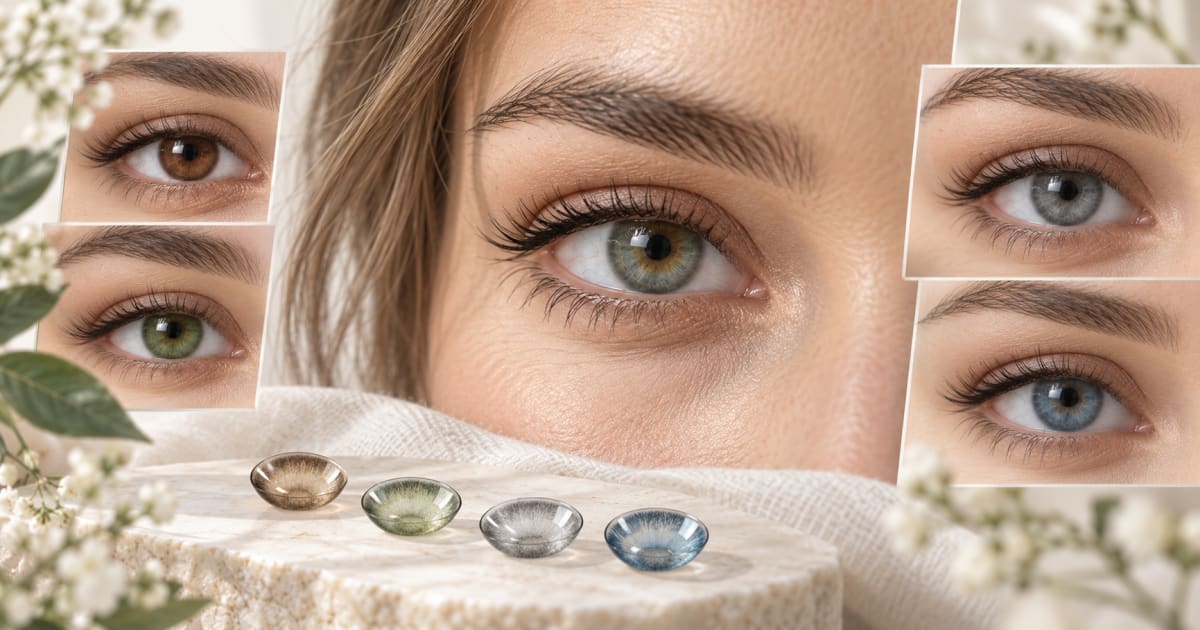
Which Contact Lens Color Suits Me? Choose the Right Shade for Your Eye Color
Not sure which shade will suit your eyes? We've covered the shades that complement brown, dark, green, blue and light eyes, and what affects the result beyond eye color.
