

Which Contact Lens Color Suits Me? Choose the Right Shade for Your Eye Color
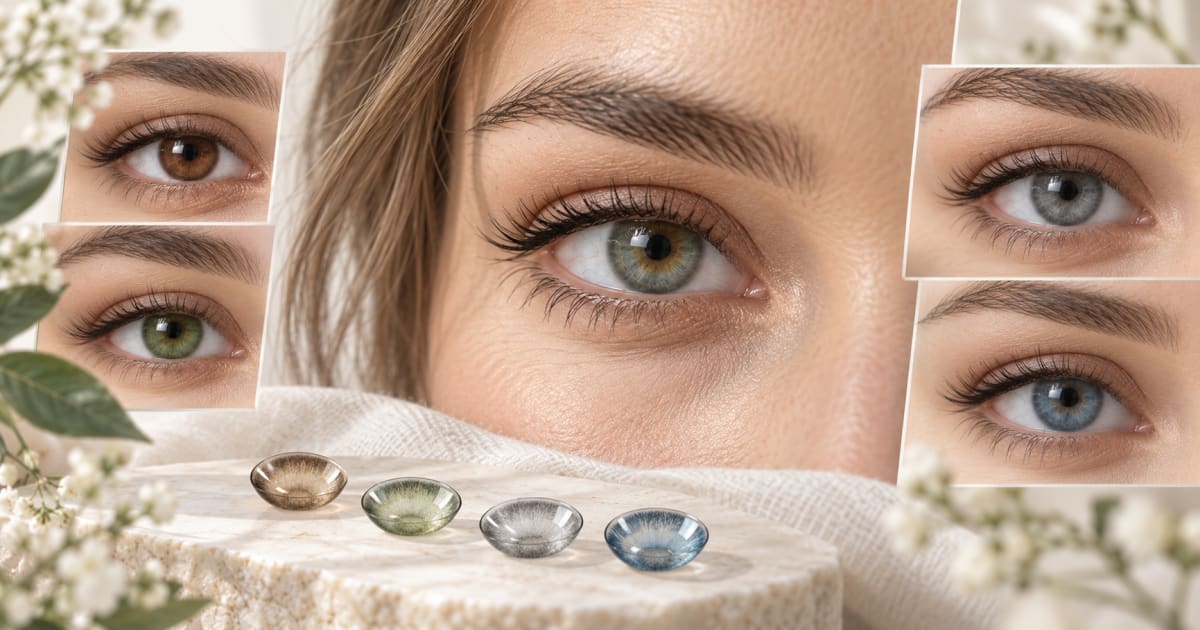
One of the most common questions we hear is simple: which color contact lenses will suit me?
And the answer is a bit less simple, because a shade that looks amazing on one eye can look completely different on another eye.
Your original eye color affects the result, but it's not the only thing. Skin tone, hair color, the coverage level of the lens, and the effect you want to achieve also play a role.
Some people want a small and subtle change, and some people want to look in the mirror and feel like they have a completely new eye color.
So instead of choosing based only on a beautiful picture you saw on a website or online, let's go through in a simple way the shades that can work with every eye color.
First of all, what kind of change do you want?
Even before choosing between green, gray, blue or brown, it's worth deciding what your goal is.
If you want a natural look for everyday, it's usually a good idea to choose a shade that blends with the existing color and doesn't create too sharp a contrast.
If you're looking for a significant change, you can go for a color that's further away from the original eye.
For example, brown eyes with a honey shade will usually give a soft change. The same eyes with bright blue will create a much more noticeable change.
There's no right or wrong here. The question is how you want your eyes to look.
Those who prefer a subtle look can also read our guide on natural colored contact lenses.
Which color contact lenses are suitable for brown eyes?
Brown eyes are probably the most interesting starting point, because you can take them in many directions.
Brown, honey and hazel
If you want a relatively subtle change, these are usually the first shades worth checking out.
Light brown can add light to the eye without completely changing the color.
Honey and hazel can create a warmer look, especially when the original eye color is medium or dark brown.
You can see this color family on the brown contact lenses page.
Green
Green can work great on brown eyes.
On a brown base, an olive green shade or slightly smoky green can get beautiful depth and look less sharp than a very bright green.
If you want the change to be noticeable but still connect with the original eye, green is an excellent option.
You can compare the shades on the green contact lenses page.
Gray
Gray is one of the colors that can change brown eyes significantly without necessarily creating an extreme look.
Dark or smoky gray tends to blend more softly, while light gray can deliver a much more dramatic change.
Blue
Yes, brown eyes can turn blue too.
It's just important to understand that the brighter and cooler the blue, the more noticeable the change will be.
If you want blue but are still looking for a relatively balanced result, it's worth starting with deep or smoky shades rather than the brightest blue available.
What color contact lenses are suitable for very dark eyes?
The darker the original eye, the more important it is to consider the lens's coverage level.
On an almost black brown eye, a lens with weak or very transparent color can blend with the base and create a different shade than what you see on a light eye.
This doesn't mean the result is worse. You just need to know what to expect.
For a more natural look, brown, honey, olive green, and deep gray shades usually blend easily.
For a stronger change, you can go for blue, light gray, or bright green.
We already have a complete guide on our site about lenses for dark eyes, so we won't go into all the details here. The point is to understand that the eye beneath the lens always participates in the result.
And what's suitable for green eyes?
If you already have green eyes, you don't necessarily have to change them to a completely different color.
Sometimes a lens can simply enhance what already exists.
Deeper green can emphasize the iris, olive green can give a warmer look, and gray can cool the shade down a bit.
Brown or hazel can also create a very interesting change, especially for those who want to go from cool green to a warmer look.
And those who want a more significant change can of course also check out blue contact lenses.
What color contact lenses are suitable for blue eyes?
With blue eyes you can usually create very subtle changes because of the light base.
Gray can transform blue into a more smoky and cool look.
Green can provide a relatively natural greenish effect.
Blue in a different shade can deepen or brighten eye color without making it feel like a completely new color.
Those who want a stronger change can go towards brown or hazel and create greater contrast.
On the gray contact lenses page you can see how many options that are especially suitable for those looking for a cool and subtle change.
What about gray or very light eyes?
With light eyes, the original color typically shows through the lens more noticeably.
This means that even a small change in shade can give a beautiful effect.
On gray eyes you can add blue for a cooler and brighter look, green for a softer appearance, or brown and hazel to warm up the eye.
Especially with light eyes you don't always need to choose the lens with the strongest coverage. Sometimes a combination between the original eye color and the lens pattern gives the most interesting result.
Eye color is only half the story
Two people with brown eyes won't necessarily look the same with the same colored contact lenses.
Why?
Because skin tone and hair color also affect the overall picture.
Warm-toned skin
Brown, honey, hazel and warm green shades can blend excellently.
But it's not a rule. Gray and blue can also create a very beautiful contrast.
Cool-toned skin
Gray, blue and cool greens can blend more naturally in many cases.
Dark hair
Dark hair sometimes allows you to go with stronger shades without the eyes feeling disconnected from the rest of the face.
Light hair
Light shades, gray, blue and green can blend very softly.
But again, these are just starting points. You don't need to choose lenses according to a chart of rules.
Don't choose a shade based only on the color name
That's one of the most common mistakes.
Two shades defined as "gray" can look completely different.
One can be cool and bright gray, while the other has a bit of warmth or green in it.
The same thing happens with green, blue and brown.
So when you're choosing colored contact lenses, look at the image, the pattern, the outer ring and the transition near the pupil, not just the shade name.
Sometimes a shade you weren't looking for based on its name will be the one that suits you best.
Want a Natural Look? Don't Go Straight for the Brightest Color
It's easy to be drawn to the brightest lens on the site.
But if your eyes are dark and the goal is a natural look, a mid-tone shade can actually look much better.
For example, instead of going from a dark brown to a very bright blue, a smoky gray or olive green can create a big change while still feeling balanced.
On the other hand, if you want a dramatic change, there's no reason to be afraid of a bright shade.
Just choose it knowing that's the effect you're looking for.
What if I'm torn between two colors?
It happens all the time.
If the hesitation is between two different shades, first think about what you want to achieve.
If one is closer to your original eye color, it will probably give a more subtle change.
If the other is far from it, it will usually be more noticeable.
You can also ask yourself what you usually wear, what makeup you like, and what hair color you have.
Sometimes that's enough to decide.
And if you still have no idea, you can use the color matching quiz and narrow down the options.
It's worth looking at several shades, not just one
If you've decided you want green, don't settle for the first green shade you saw.
Look at olive green, bright green, smoky green, and shades that have a blend of brown or gray.
The same goes for blue and gray.
The small differences between shades can make a big difference on the eye.
On the all lenses and shades page you can browse between collections and compare several color families instead of locking yourself into one option right away.
Don't forget that the picture on the site is just a starting point
Pictures are important, but they can't guarantee how the lens will look on you.
Lighting, camera, your original eye color, and skin tone affect the result.
So even when you see a picture you really liked, use it as inspiration and not as a guarantee that the result will be identical.
This is also why choosing based on your original eye color gives a better starting point.
So which color contacts are really right for you?
If we sum it up simply:
For brown and dark eyes you can start with brown, honey, hazel, olive green, and gray if you want a soft change, or go to brighter blue and gray if you want a strong change.
For green eyes, you can deepen the green, shift to gray, or warm up the look with warmth and hazel.
For blue eyes, you can play with blue, gray, and green for subtle changes, or shift to warm tones for significant contrast.
And for very light eyes, almost any small change can be noticeable.
But in the end, the most important thing is not what is "supposed" to suit you.
The right shade is the one that gives you the look you want when you look in the mirror.
Sometimes it's the most natural shade there is, and sometimes it's precisely a color you never thought you'd choose.
Links you might find useful
Frequently Asked Questions
Light brown, honey, hazel, green, and gray can blend beautifully with brown eyes. For a more dramatic change, you can also choose blue or lighter shades.
Shades like gray, light green, and blue can create a brighter appearance, but the result depends on your natural eye color and the lens coverage level.
Yes. Blue contact lenses can transform even brown and dark eyes. The brighter the blue and the stronger the coverage, the more dramatic the change typically is.
Generally, a shade that complements your natural eye color and creates a soft transition in the pupil area will look more natural. There's no one shade that looks natural on everyone.
It can help guide your choice, but shouldn't limit it. Warm shades often pair well with warm tones like brown, honey, and hazel, while cool tones complement gray, blue, and green. Ultimately, it comes down to personal preference.
Still unsure which shade to choose?
Answer a few quick questions in our shade matching quiz and get a personalized recommendation tailored to your eye color, skin tone, and the look you want to achieve.
More Articles Worth Reading
More articles on this topic →
Natural Colored Lenses: How to Choose a Shade That Actually Looks Natural?
Want colorful contact lenses that blend naturally into your eye and don't look printed on? Here's what really affects the look: your original eye color, the shade, the transition around the pupil, and the outer frame.
Contact Lenses for Purim: Safety, Proper Use and What to Do with Them After the Holiday
Purim is approaching and you're already thinking about the perfect costume? The truth is that even the most elaborate costume has a little secret that can upgrade it from end to end – colored contact lenses. Let's discover how they will turn you into the star of the party.
Colored Contact Lenses for Dark Eyes: The Guide to a Natural and Stunning Look
Dreaming of changing your dark eye color but worried it won't look natural? Don't worry, we're here to prove to you that it's possible – and easily!
