

How to Put on Contact Lenses for the First Time? A Friendly and Easy Guide
Many people dream of changing their appearance, enjoying the comfort of being without glasses, or simply having a new and fascinating eye color. Colored contact lenses or prescription contact lenses offer a great solution, but wait, how do you put on contact lenses at all?
The truth is that with a little practice and patience, anyone can become an expert at inserting contact lenses. If you're new to the world of lenses, or if you simply want to refresh your memory, you've come to the right place. Here's a comprehensive guide that will hold your hand and help you get through the process easily and confidently.
Preliminary Preparation: Important Steps Before You Start
Before you even get close to your eyes, there are a few critical things you need to do. Proper preparation is the key to safe and comfortable contact lens insertion, and it will save you a lot of frustration down the road.
Cleanliness is Key
The most important thing before you touch your eyes or lenses is to thoroughly wash your hands. Use antibacterial soap and wash your hands for at least 20 seconds, including between your fingers and under your nails. Then, dry your hands thoroughly with a clean, lint-free towel to avoid transferring bacteria or particles to the lens and eye.
Remember, your eyes are especially delicate, and any small dirt can cause irritation or even infection. Cleanliness is not just a recommendation, but an absolute necessity to maintain your eye health.
Checking the Lens
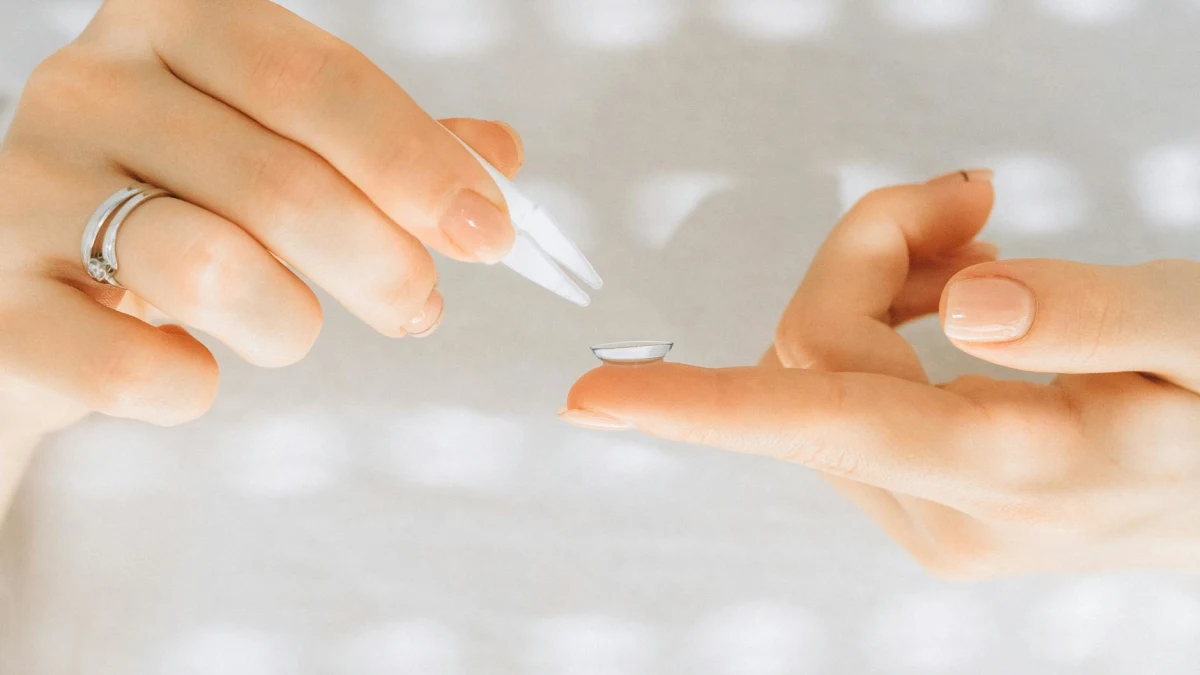
Before you try how to put on contact lenses, make sure you check the lens itself. Gently remove it from its packaging or case and place it on the tip of your index finger. Look at it closely and make sure it's clean, intact and free of tears or scratches. If you see any damage, don't use it – a damaged lens could cause discomfort and even harm your eye.
Also, make sure the lens is not inside out. A lens that sits correctly on your finger will look like a small bowl with straight edges pointing upward. If the edges look slightly outward, like a plate, it's inside out. To fix this, simply flip it gently on the palm of your hand and try again. An inside-out lens won't sit comfortably and will cause blurred vision.
Appropriate Environment
Choose a well-lit place with a clean surface. Ideally, you should have a mirror within reach. Good lighting will allow you to clearly see the lens and the eye, and will make the insertion process easier. A clean surface will prevent the lens from getting dirty if it accidentally falls from your finger.
How to Put on Contact Lenses: Step-by-Step Guide
We've reached the moment of truth! Now that you're ready, let's learn how to actually put on contact lenses. Remember, patience is key, and don't get discouraged if it doesn't work on the first try. Even optometrists took time to learn.
Step 1: Removal and Preparation of the First Lens
After you've washed and dried your hands, remove the first lens (it's recommended to always start with the same eye, for example, the right eye, to avoid confusion). Place it on the tip of your index finger of your dominant hand. Make sure it sits in the center of your finger and the correct side faces upward (like a bowl).
Step 2: Opening the Eye Stably
Using the middle finger of the same hand (the hand holding the lens), gently pull the lower eyelid downward. At the same time, using the index or middle finger of the other hand, pull the upper eyelid upward. It's important to keep your eyelids open wide and stable to prevent involuntary blinking.
Step 3: Inserting the Lens into the Eye
Look straight ahead into the mirror, or look slightly upward. Slowly and gently bring your finger with the lens closer to your eye. Try not to blink. When the lens touches the center of the eye (on the cornea), it will stick to it almost immediately. Don't be afraid to touch your eye – it feels strange at first, but it doesn't hurt.
Step 4: Blinking and Adjustment
Once the lens is stuck to your eye, gently release your eyelids. Look down, to the sides, and up to allow the lens to settle properly. Then blink gently a few times. If the lens is sitting correctly, your vision will be clear and it won't feel foreign. If you feel discomfort or blurred vision, the lens may not be positioned well or it may be inside out. In that case, remove it (see tips below) and try again.
Step 5: Repeating the Process for the Second Eye
Repeat all the steps for the second eye. Be sure to wash your hands again if you've touched something unclean between eyes. With practice, the entire process will become shorter and more natural.
How to Insert Contact Lenses Easily: Tips for Beginners and Solutions to Common Difficulties
Your first experience with contact lenses can be challenging. Many people experience difficulties such as uncontrolled blinking, fear of touching the eye, or difficulty positioning the lens. In short, it's completely normal. Here are some contact lens tips to help you overcome these obstacles and insert lenses like a professional:
Patience and Calmness
The most important thing is not to rush. If you're struggling, take a short break, breathe deeply, and try again. Stress will only cause you to blink more and make the process harder. Remember, this is something that requires learning, and with each attempt you improve.
Appropriate Mirror and Lighting
Use a large, well-lit mirror. This will help you see exactly what you're doing and better understand the position of the lens. Some people prefer a closer mirror, and others prefer a more distant one. Try what's comfortable for you.
Different Holding Techniques
If you're struggling to keep your eyelids open, try different variations. Some prefer to pull the upper eyelid with one finger of the non-dominant hand and the lower lid with a second finger of the same hand, while the dominant hand inserts the lens. Try to find the technique that feels most stable and comfortable for you.
Deep Breathing and Distraction
Sometimes, over-concentration on the action itself causes us to blink. Try breathing deeply through your mouth while you insert the lens. This can help calm your natural blink reflex. You can also try talking to yourself out loud or singing a short song – anything to distract yourself a bit from the focused action.
What to Do if the Lens Falls?
If the lens falls on a clean surface, don't worry. Rinse it thoroughly with multi-purpose contact lens solution (not tap water!). If it falls on a dirty surface, it's better to throw it away and use a new lens. Your eye health is more important than a small saving.
What to Do if You Feel Discomfort?
If after inserting the lens you feel burning, irritation, or blurred vision, remove it immediately. There may be dirt on it, it may be inside out, or it may be damaged. Clean it again with solution, check it, and try to insert it again. If discomfort persists, don't insert the lens and see an optometrist.
Personal Fitting of Colored Lenses
If you're looking for colored contact lenses and wondering which color will suit you, it's worth knowing that there is professional guidance available. At FANCY LOOK, for example, they offer a personal consultation service to help you choose the perfect color for you, based on your natural eye color and skin tone. This can make all the difference in your user experience.
Additional Tips for Maintaining Contact Lenses and Eye Health
The ability to insert contact lenses is just part of the story. It's also important to know how to maintain them and your eye health over time. Especially when it comes to annual lenses, like the ones we recommend, maintenance is especially important.
Cleaning and Maintenance of Annual Lenses
If you use quality annual contact lenses, like those from FANCY LOOK, it's important to stick to a daily cleaning routine. After each removal, clean the lenses with a dedicated solution and keep them in a clean case filled with fresh solution. Never use tap water to clean or store lenses, as they contain bacteria that can cause serious infections.
Eye health experts recommend replacing the cleaning solution in the case every time you store the lenses, rather than adding fresh solution to old solution. Also be sure to replace the case itself every three months to prevent bacterial buildup.
When Not to Wear Contact Lenses?
There are times when it's better to avoid inserting contact lenses: if your eyes are red, itchy, painful, or if you have unusual eye discharge. Also, in case of a cold, flu, or severe allergy, it's recommended to remove your lenses until symptoms subside. In these situations, the eyes are more sensitive, and lenses may worsen the condition or cause infection.
Visit an Optometrist
Even if you wear non-prescription contact lenses, it's important to visit an optometrist regularly, at least once a year. The optometrist will check your eye health, ensure that the lenses fit you optimally, and give you tips and personal recommendations. This is critical for maintaining good vision and eye health over time, as noted by leading optometrist associations.
Benefits of Annual Lenses
Annual contact lenses, like those you can find with us, offer great comfort and flexibility. They are designed for daily use throughout an entire year, saving you the need for frequent purchases, and come in a huge variety of colored lenses and shades that will allow you to change your appearance in style and with confidence. All of FANCY LOOK's contact lenses are approved by the Israeli Ministry of Health, so you can rest assured that they are safe to use.
Links you might find useful
Frequently Asked Questions
No, inserting contact lenses should not hurt. You may feel a strange sensation or mild discomfort at first, but strong pain or burning indicates that the lens is not positioned correctly, that it's damaged, or that there's dirt on the eye or lens. In that case, remove the lens, clean it, and try again.
Most people get used to inserting contact lenses within a few days to a week of regular practice. At first it can be slow and challenging, but with each attempt you gain confidence and speed. Patience is key, and don't give up if it doesn't work right away.
If the lens doesn't stick to the eye, it may be too dry, inside out, or you may have tears on the tip of your finger. Make sure the lens is moist (using dedicated solution), that it's positioned correctly (like a bowl), and that your hands are dry. Try again gently, making sure you're keeping your eyelids open wide.
Yes, you can wear contact lenses with long nails, but it's important to be extra careful. Use the pad of your finger rather than the tip of the nail to touch the lens or eye. Long nails can scratch the lens or the eye, so it's recommended to keep them clean and well-groomed.
Not sure which shade is right for you?
Choosing colored lenses can be exciting, and we're here to help you find the perfect shade. Answer a few short questions and get a personalized recommendation.
More Articles Worth Reading
More articles on this topic →
Cleaning and Storage of Monthly Contact Lenses: The Complete Guide
Monthly contact lenses are a convenient and effective solution for sharp vision and personal style, but to maintain eye health and maximum comfort, it's important to know how to clean and store them properly. Let's dive into a step-by-step guide that will help you get organized.
Comprehensive Guide to Choosing and Inserting Contact Lenses: Everything You Need to Know
This comprehensive guide will provide you with all the essential information about properly choosing, inserting, and maintaining contact lenses, ensuring you can enjoy sharp vision and optimal eye health.
